







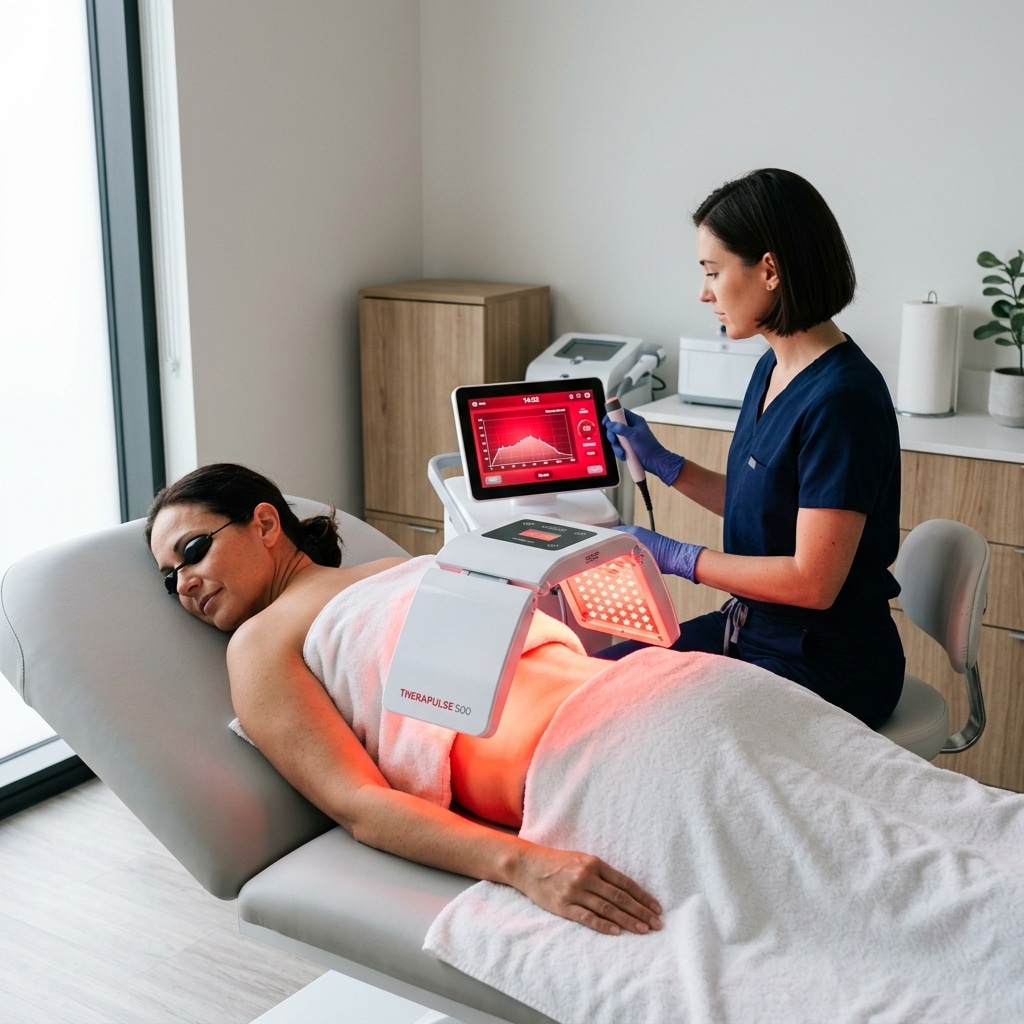

Red light laser therapy works through a clear sequence inside the body, and this guide walks through the red light laser therapy cellular mechanism from start to finish. Coherent laser photons reach the fat layer beneath the skin, are absorbed by a cell enzyme, and trigger a chain of small events that end with the body clearing stored fat on its own. Wellness Spot in Hurst, TX, built this guide for readers who already know what red light laser treatment does and want to understand the process behind it.
This guide moves through six stages, starting with the physics of the light itself and ending with how the body removes what the treatment releases. Each stage builds on the last, so the full picture comes together by the end. We keep the language simple and grounded in what happens inside real tissue.
Why Coherence Is the Property That Makes Everything Else Possible
Light from an LED panel spreads out in many directions at once, so it scatters at the skin’s surface. Laser light works differently because its photons travel in phase, at one wavelength, in a single directed beam. This steady structure lets the light keep its path as it moves through skin and into deeper tissue.
That steady path is why laser light reaches the fat layer under the skin, while LED light stays closer to the surface. Invisa-RED uses this coherent laser property to send light through the dermis and into the subcutaneous fat layer. Every stage of the red light laser therapy cellular mechanism described in this guide depends on this first physical step.
Two Frequencies Two Targets
Invisa-RED sends out two coherent laser wavelengths at the same time, 680nm and 980nm, and each one reaches a different layer of tissue. The 680nm wavelength works on the skin and the upper fat layer close to the surface. The 980nm wavelength penetrates deeper, reaching the layer where fat cells are more abundant.
Using both wavelengths together means the treatment reaches the surface tissue and the deeper fat layer in one session. Since fat sits at different depths across the body and from person to person, this two-wavelength approach covers a wider range with steady results. This step sets up the next part of the red light laser therapy cellular mechanism, where the light meets the cell itself.
Photon Absorption and the Red Light Laser Therapy Cellular Mechanism
Once the laser photons reach the fat cells, light-sensitive molecules inside the cell called chromophores absorb them; the main one here is cytochrome c oxidase, an enzyme that works inside the mitochondria. This absorption starts a response called photobiomodulation, where the mitochondria, the parts of the cell that produce energy, become more active. That activity raises the output of the electron transport chain, and the cell begins making more ATP, the molecule that powers every function inside it.
This rise in ATP production is the turning point in the red light laser therapy cellular mechanism, since it sets off the next change inside the fat cell. From here, the process moves into the cell membrane itself. Everything the cell does after this point traces back to this single step.
ATP Synthesis and the Fat Cell Response
Fat cells store energy as triglycerides, which are built from glycerol and fatty acids. When ATP production rises inside the cell, the outer membrane opens a small, temporary passage, and stored triglycerides, water, and waste move out into the space around the cell. The cell stays whole through this process, since this release works through normal cell activity and keeps the cell structure in place.
Once the triglycerides and fatty acids sit in the tissue fluid outside the cell, they become ready for the body to move and clear them away. This stage marks the shift from the cell itself to the wider systems that carry the released material out of the body. The next section follows that path.
Lymphatic Clearance
The lymphatic system runs alongside the blood vessels through the body, carrying fluid, waste, and cell byproducts away from tissue. Once released triglycerides and fatty acids sit in the tissue fluid, lymphatic vessels pick them up and carry them through lymph nodes toward the liver, where the fatty acids are broken down. The body then removes the end products through breathing, sweat, and urine over the hours and days that follow.
Hydration and light movement after treatment support this clearance process, since both help the lymphatic system move fluid at a steady pace. This closing stage completes the red light laser therapy cellular mechanism from the first photon to the last step of removal. The body carries out this whole process on its own once the treatment sets it in motion.
The Clinical Foundation
Invisa-RED holds FDA 510(k) clearance and has undergone IRB review, with a registered clinical trial (NCT03811093) comparing the device against a sham version for fat and appearance outcomes. This kind of registered, reviewed evaluation gives the treatment a documented record to stand on. Wellness Spot in Hurst, TX runs Invisa-RED sessions under medical supervision as part of a guided program.
The steps covered in this guide-coherent light, dual wavelength targeting, mitochondrial activation, membrane release, and lymphatic clearance-form the same process that this research has studied. Readers who want the full trial data can ask their provider for the results directly. This section closes the science part of the guide before we move to the next step.
Understanding the Mechanism Is the Start of a Better Decision
Knowing how the red light laser therapy cellular mechanism works from beginning to end helps a person decide whether the treatment fits their goals. We built this guide to give that full picture in plain language, step by step. A free consultation at Wellness Spot in Hurst, TX, gives readers a chance to ask questions about how this process applies to their own situation.
Call 817-849-2361 to schedule a visit and talk through the details with the team. This conversation helps confirm whether the treatment lines up with what a person wants to achieve. The team at Wellness Spot walks through every question at this stage.
Frequently Asked Questions
Why is laser light better than LED light for reaching fat cells?
Laser light travels in phase at one steady wavelength, so it holds its path through the skin and into deeper tissue. LED light scatters at the surface since its photons move in many directions at once. This steady path lets laser light reach the fat layer that LED light rarely reaches.
What does coherent light mean in laser therapy?
Coherent light means the photons move together, in phase, at a single wavelength, in one directed beam. This structure keeps the light steady as it passes through tissue. Coherence lets the laser reach deeper fat layers with a consistent path.
What do the 680nm and 980nm wavelengths do?
The 680nm wavelength works on the skin and the upper fat layer close to the surface. The 980nm wavelength reaches deeper into the fat layer, where fat cells are more abundant. Using both together covers a wider range of tissue depth in one session.
How does red light affect the mitochondria inside cells?
Red and near-infrared light gets absorbed by cytochrome c oxidase, an enzyme inside the mitochondria. This absorption increases electron transport chain activity and boosts ATP production. This process is known as photobiomodulation.
How does the red light laser therapy cellular mechanism release fat from cells?
The rise in ATP production opens a small, temporary passage in the fat cell membrane. Stored triglycerides, water, and waste move out through this passage into the surrounding tissue. The cell stays whole and keeps its structure through this step.
Does this process destroy fat cells the way cold-based treatments do?
No harm comes to the cell structure during this release, since the fat cell empties its contents through normal cell activity and stays intact. Cold-based treatments work through a separate process that breaks down the cell itself. These two approaches work through different steps inside the body.
How does the body remove fat after laser treatment?
Once triglycerides and fatty acids sit in the tissue fluid, the lymphatic vessels carry them through lymph nodes toward the liver. The liver breaks down the fatty acids, and the body removes the end products through breathing, sweat, and urine. This process continues over the hours and days after each session.
Is Invisa-RED backed by clinical research?
Invisa-RED holds FDA 510(k) clearance and has gone through IRB review as part of a registered clinical trial, NCT03811093. This trial compares the device against a sham version for fat and appearance outcomes. Readers can ask their provider for the full trial results to review the data directly.
Why does hydration matter after a treatment session?
The lymphatic system continues clearing released fat and fluid for hours and days after each session. Steady hydration and light movement support this clearance process at a good pace. This step helps the body complete the full mechanism the treatment sets in motion.
How can someone find out whether this treatment fits their goals?
A free consultation at Wellness Spot in Hurst, TX, gives a person the chance to ask questions about the process and their own goals. The team walks through each step of the mechanism and answers questions in person. Readers can call 817-849-2361 to schedule a visit.